
Women’s Power – A Special Project for International Women’s Day
The Romance of Space Returns: Why the Office of 2026 Will Feel More Human Than Ever
As the CEO of Waxman, Israel’s leading workplace furniture brand, Michal Waxman is not merely in the business of furniture; she is an architect of perspectives. With decades of experience working alongside the country’s top architects and largest organizations, Michal leads the company with a mission: to transform the office into a space of inspiration, security, and meaning. For her, 2026 represents a pivotal turning point where office design returns to a language that is human, warm, and evocative.
We sat down with Michal for a conversation about the future of workspaces, the choice (no longer a given) to come into the office in a post-digital age, and how spatial elements become a narrative of passion and intimacy.
What has changed in the world of work that is forcing organizations to rethink the office environment?
“In recent years, the world of work has undergone a fundamental shift: if the office was once the default, today it is a choice. Since employees can work from anywhere, the office environment must justify itself anew-not through a fleeting ‘wow’ effect, but through a daily experience of comfort, focus, serenity, and genuine human encounter.”
Where does Waxman fit into this transformation?
“Waxman has always operated through a systemic lens. Every project begins with a deep understanding of the organization’s DNA. Organizations increasingly realize that a workspace is not just an aesthetic matter, but a strategic tool that directly impacts productivity and employee well-being. The conversation is shifting from ‘how many workstations can fit in this floorplan’ to ‘how people actually feel and function in that environment over time.'”
The design language of 2026 marks a transition from ‘statement design’ to ‘quiet expressiveness’-what does that look like in practice?
“It means spaces that are calm, tactile, and personal; spaces that aim to embrace rather than overwhelm. In a world characterized by speed and overstimulation, workspaces must become sanctuaries of focus, intimacy, and emotional grounding.”
What differentiates Waxman in a competitive office furniture market?
“Our differentiation lies, first and foremost, in our approach. We don’t start with a catalog; we start with a dialogue. Only after mapping the specific needs do we move toward building a solution. Our ability to blend a curated mix of international brands with local manufacturing and customization allows us to provide a holistic solution. This is backed by our capability to manage large-scale projects from end-to-end, alongside a professional team and a deeply personal relationship with the client.”
You are a woman leading a prominent company in a traditionally male-dominated industry. How does this influence your leadership?
“In my view, the advantage of female leadership is the ability to bring something different to the table: a synthesis of strategic vision and the human experience. I don’t see these as opposites, but as a source of strength. My advantage in leading Waxman as a woman is the ability to bridge engineering precision and the technical world with the ’emotional intelligence’ of a space. It’s a broader perspective that asks how a space makes people feel. It is the ultimate synergy between technical specifications and the ability to introduce softness, aesthetics, and well-being into environments that are often perceived as rigid.”
The term Well-Being is everywhere today. Is it a trend or a real change?
“It is a profound structural change. Management now understands that the work environment directly impacts both physical and mental health. Waxman acts as a strategic partner, understanding that the right pieces are those that support the body and reduce burnout. As I see it, this is a fundamental responsibility of an organization toward its people.”
To conclude our conversation, I asked Michal to present her five predictions for office design in 2026:
1. Soul and Comfort: Workspaces will be infused with the soul and comfort typically reserved for personal spaces, moving away from traditional corporate alienation.
2. Color as Emotional Infrastructure: Color is no longer a mere decoration; it is a language of intimacy and serenity that fosters a sense of security within the space.
3. The Tactile Experience: A rich use of textures in furniture and finishes that invites touch, coupled with a deep appreciation for natural materials.
4. Human-Centric Functionality: Materials take center stage, serving the function and comfort of the employee first, rather than just the visual appeal.
5. Layers of Style: Creating a dynamic space through the fusion of timeless classics and technological pioneering.
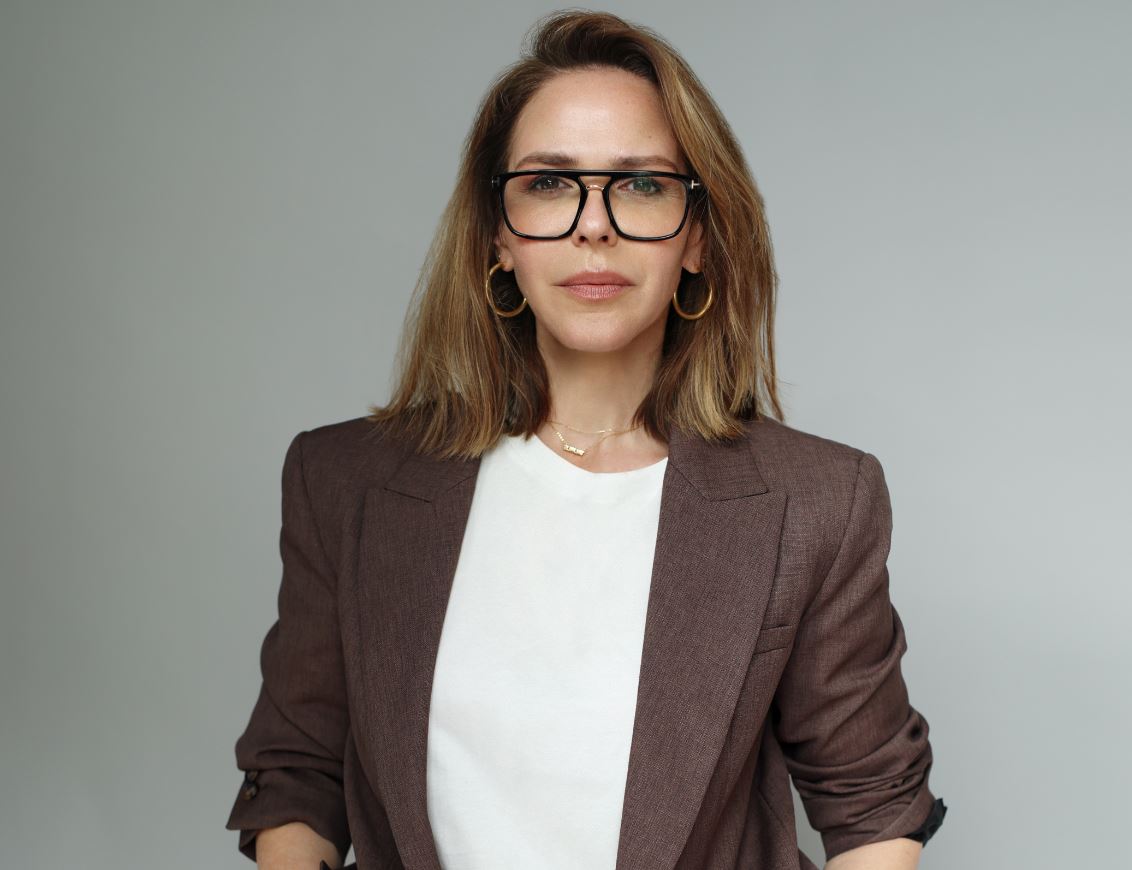
Michal Waxman